







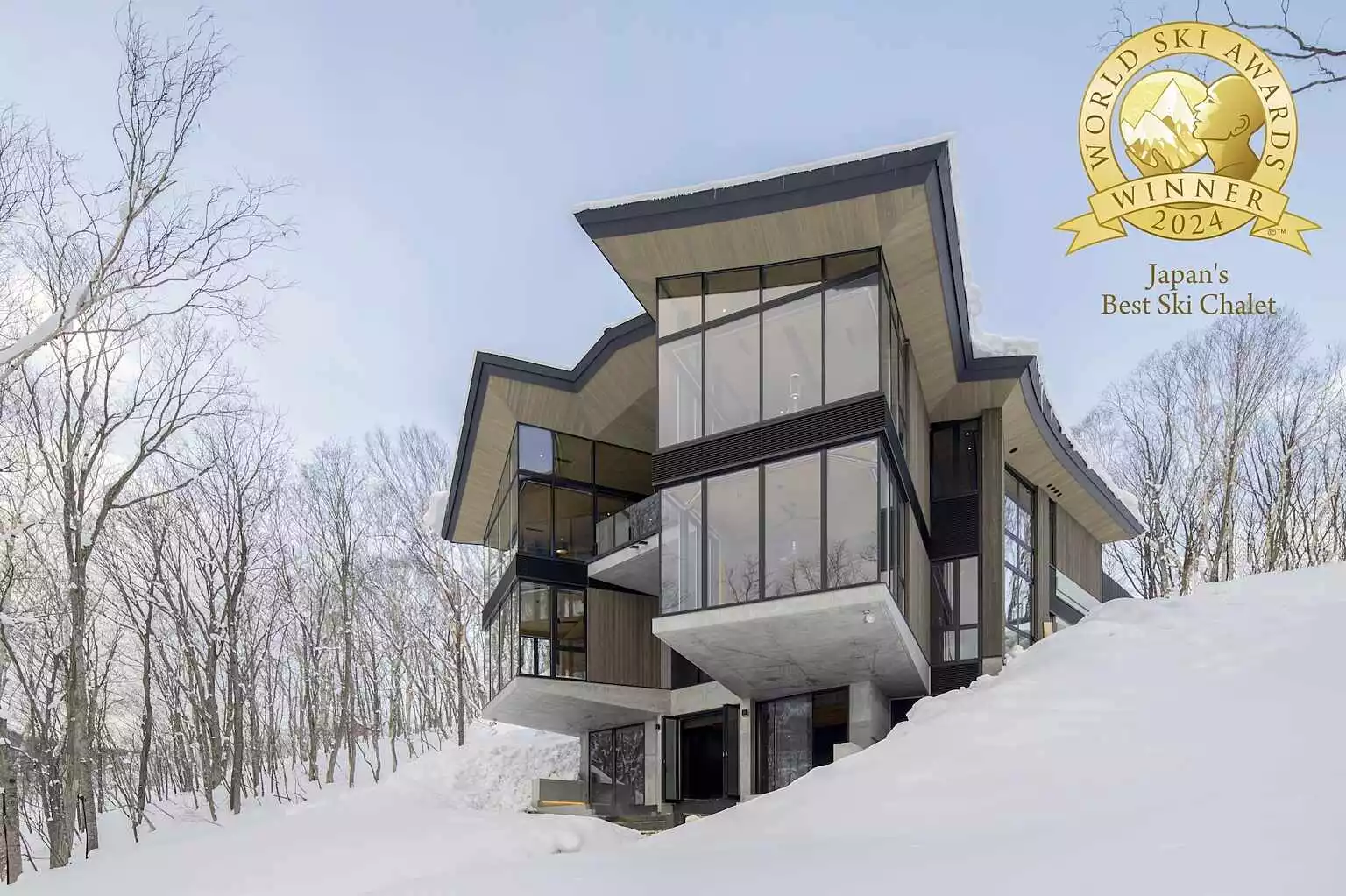


Chalet Review: Tsubasa at Hanaridge
From winter butler service to spacious indoor-outdoor onsen, find your bliss at Tsubasa at Hanaridge, named Japan’s Best Ski Chalet at the World Ski Awards 2024
Read now
Book winter direct, get ¥10,000 guest experience credit Learn More

Kaoru Mukaida turned a family ritual into her vocation. She tells us how she became an onsen sommelier and why each natural spring is unique.
Onsen sommelier Kaoru Mukaida grew up in a family that loved hot springs. Moving to Niseko turned this passion into an extensive study — the baths around town were close enough for regular visits, and once she started comparing them, she couldn’t stop.
Mukaida noticed that the colour changed from spring to spring, and so did the scent. Other elements like the feel of the water and how long the warmth lasted on the way home also outlined just how different each spring is. In 2012, she qualified as an Onsen Sommelier to find out why.

In 2014, the student had become the teacher. Mukaida started running the Onsen Sommelier seminars in Hokkaido; lectures and research papers followed, along with her field research on bathing rituals. In Niseko, she heads the Onsen Club and serves as the area’s Onsen Ambassador, both titles for the local who really knows which spring is worth the drive.
Her professional life rarely strays far from the natural springs. She is also COO of Yokusulu, an onsen and sauna design consultancy that provides recommendations on how best to incorporate onsen and elegant bathing rituals into architectural design.

For onsen lovers, discover our ski chalets, condo hotels and accommodations with on-site onsen in Niseko, Furano, and Rusutsu.
Read MoreSince 2023, she has studied historic bathhouses as a Historic Architecture Onsen Expert, looking at the buildings and the communities that grew up around them. In spring 2026, she took that research to the graduate school of Sapporo City University, where she is studying how to protect these treasured mineral springs for future generations.
We caught up with her in the run-up to the first Yuchelin Awards to talk about the water, the old bathhouses, and why no two springs feel quite the same.
An Onsen Sommelier is a privately administered qualification through which participants learn how to read hot spring analysis reports, follow proper bathing practices, and acquire the knowledge needed to enjoy onsen safely and comfortably.
The Onsen Sommelier Association’s motto is to “observe good manners and enjoy bathing”. Of course, learning about different spring qualities is part of it, but I also believe it's important to promote proper knowledge, etiquette and what you might call “onsen literacy”.
When I visit an onsen, I pay attention not only to the spring quality and mineral composition, but also to the yuzukai (how the hot spring water is managed and used in the bath), as well as its colour, aroma and how it feels on the skin. Enjoying the design and atmosphere of the bathing space itself is also part of the pleasure of visiting an onsen.
You can become certified by attending a seminar run by the Onsen Sommelier Association, or by studying at home and completing the certification process remotely.
The programme covers the fundamentals of hot springs, how to read hot spring analysis reports, the characteristics of different spring types, indications and contraindications, proper bathing methods and precautions, as well as bathing etiquette. The certification seminar does not have a pass-or-fail examination like a typical qualification test, while the home-study course includes a simple test by email.
I went on to obtain two advanced qualifications, Onsen Sommelier Master and Onsen Sommelier Ambassador, and I am currently certified as a two-star Onsen Sommelier.
Base yourself luxuriously: Ski & Soak: Best Luxury Chalets with Onsens

I am currently involved with organisations including the Niseko Onsen Club, Yokusulu, and Yuchelin. At Niseko Onsen Club, we visit hot springs throughout the region, share their appeal, and use onsen as a way to build connections within the local community.
Yokusulu is a company comprising specialists in bathing culture from onsen to saunas and baths. We place particular importance on yokukan (the physical and sensory experience of bathing), and work to carry Japan’s bathing culture into the future through architectural planning, bathing programmes, product development and other initiatives.
At Yuchelin, we evaluate and communicate the value of the hot spring water itself from perspectives such as individuality, freshness and rarity. In addition to proposing new standards for choosing onsen, we aim to ensure that valuable hot spring sources and the facilities that protect them are properly preserved for future generations.
I am also a member of academic societies related to hot springs and am involved in onsen research. These activities all share the same underlying goal: to recognise onsen as an indelible part of local culture and as a valuable regional resource, and to pass that onto the next generation.
Because I am also involved in evaluating hot springs, I do not choose a single place and say, “this is the best”. How an onsen feels can change depending not only on its spring quality and how the water is managed, but also on the season and even your physical condition that day.
I enjoy the aroma of milky-white sulfur springs and their slightly extraordinary atmosphere, but I also like the smooth feel of alkaline simple hot springs and the moist, soft sensation of sulfate springs.
I am interested not only in the spring type itself, but also in how the source of water is delivered to the bath and how its temperature and freshness are maintained.
Ultimately, I am drawn to onsen where the water has a character unique to that particular place, and where you can sense that the people running the facility genuinely value and care for it.

Condo hotel amenities meet the soothing ritual of Japanese onsen — your elevated Hokkaido ski holiday starts here.
Read More
Yes. Even if people understand basic etiquette, it is easy to become caught up in conversation with friends and unintentionally speak too loudly. Another thing to be careful about is staying in the bath too long because you think, “I came all this way”, or visiting too many onsen in a short period of time.
It is best to hydrate before bathing, use kakeyu (pouring hot water over the body before entering the bath) to gradually accustom your body to the temperature, and take breaks rather than pushing yourself. In particular, avoid getting straight into an onsen immediately after exercise such as skiing, or after drinking alcohol for safety reasons.
If you would like to enjoy onsen on a deeper level, it can also be interesting to look at the hot spring analysis report displayed in the changing room or elsewhere in the facility. Once you know the spring type, source temperature and pH, paying attention to the colour, aroma and feel of the water makes it much easier to notice the differences between different onsen.
Being able to travel only a short distance and encounter completely different hot spring water is one of the unique pleasures of onsen-hopping in Niseko. Around the Niseko mountain range, there are numerous hot spring areas and sources. Some facilities use naturally emerging hot spring water, while others use water pumped from underground wells.
Much of the hot spring water in the Niseko area is thought to originate from rainwater and snowmelt that seep underground, where it is heated beneath this volcanic region and absorbs minerals from the surrounding rocks and volcanic gases before rising back toward the surface.
Because the geology and underground pathways differ from place to place, the spring qualities also vary. Of the ten officially classified hot spring types, seven are said to be found within the the Niseko hot spring area.
In Hirafu, several drilled hot spring sources are used by different facilities. However, even separate wells may be connected to the same underground hot spring aquifer and can potentially affect one another. After declining water levels were observed in some areas, the Hokkaido Government designated parts of Hirafu as hot spring protection zones, and introduced certain standards for new drilling.
Goshiki Onsen, by contrast, is a naturally emerging hot spring closely linked to the volcanic activity around Iwaonupuri. In the Yumoto Onsen area of Rankoshi, hot spring water from Oyunuma (a natural hot spring pond), located on the southern slope of Chisenupuri, is used.
Other areas include Konbu Onsen, Annupuri Onsen, Higashiyama Onsen and Niseko Ekimae Onsen, each with its own separate sources.
We can sense your excitement: First Chair, Pencilled In: When Does Niseko United Open for 2026/27?

Niseko has multiple hot spring sources within their respective areas, so they cannot be compared based on a single spring type.
At Niseko’s Goshiki Onsen and Yumoto Onsen, you can enjoy water containing volcanic sulfur components, with distinctive aromas and colours. In Konbu, Annupuri, Higashiyama and Hirafu, the spring types vary widely, including chloride springs, bicarbonate springs and sulfate springs. Each facility offers a different bathing sensation, such as smoothness, a moist feel on the skin, or a strong warming effect.
I would recommend Niseko Goshiki Onsen Ryokan in Niseko, located in the mountains between Mount Niseko Annupuri and Mount Iwaonupuri. You can soak in gensen kakenagashi (free-flowing hot spring water supplied continuously from the source) with no additional heating while enjoying the changing seasonal scenery of the Niseko Mountain Range.
Additional reporting: Sae Matsuda and Qian Yanyang

Explore Mount Yotei's best winter views, from Niseko Tokyu Grand Hirafu's slopes to Kabayama's sunrise light on snow-covered fields.
Read More
Content Director
As a content curator who’s always curious about where a good story starts, Xinying finds inspiration from her travels while seeking out beautifully designed stays, cafés and museums to visit. Born and raised in Singapore, she now calls Kyoto her second home.

